Law firm, Belgrade · enforcement proceedings · September 2026
Trial preparation from 10 hours to 10 minutes.
- 3 days to a working system, about 15 hours of work
- 485 documents processed, none failed
- 108 of 109 citations machine-verified in the source
Starting point
Before a hearing, a lawyer has to re-read the whole case: hundreds of scanned pages of court orders, bailiff’s conclusions and letters. The status of a case lives in people’s heads and in an Excel file someone updates by hand. When a client asks for a portfolio overview, a team spends days rebuilding what a system should know instantly.
What we built
In three days, about fifteen hours of work, a system that:
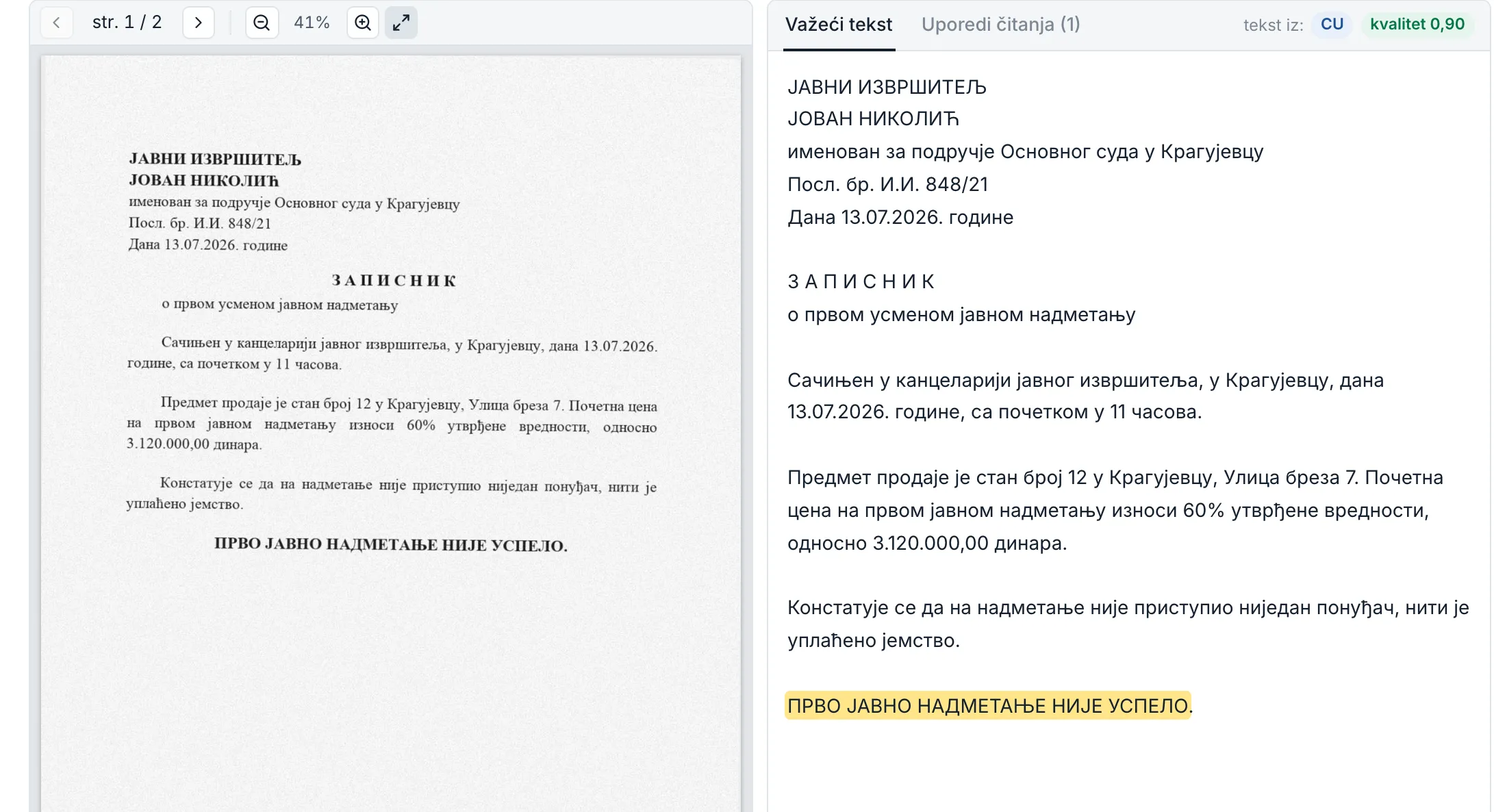
- reads scanned documents and extracts facts: parties, dates, amounts, actions;
- remembers the document, page and verbatim quote for every fact, and machine-checks that the quote really exists in the source;
- computes deadlines, interest and idle days in the database, not in the model;
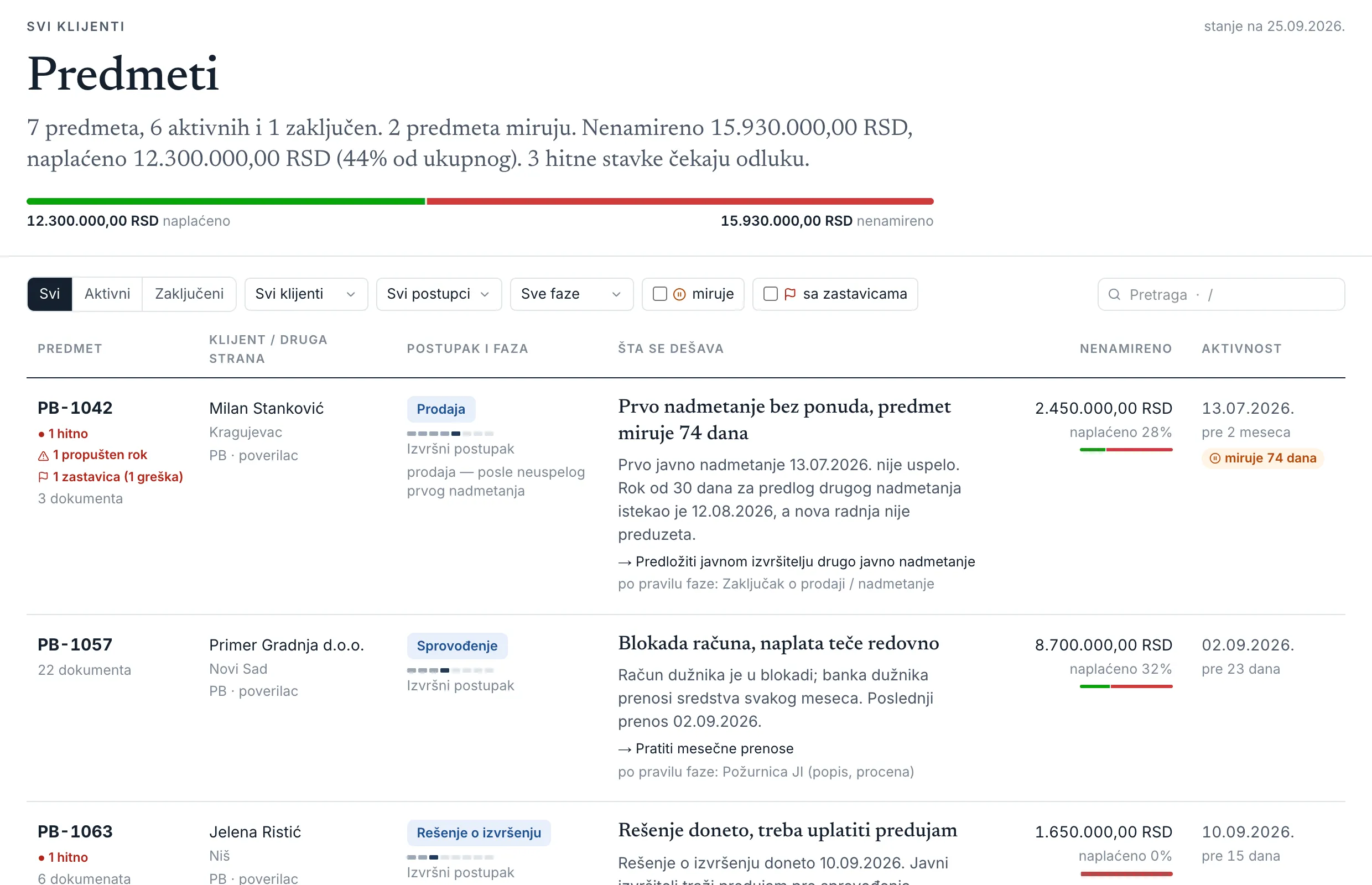
- shows the whole case on one screen: stage, timeline with sources, amounts and a suggested next step;
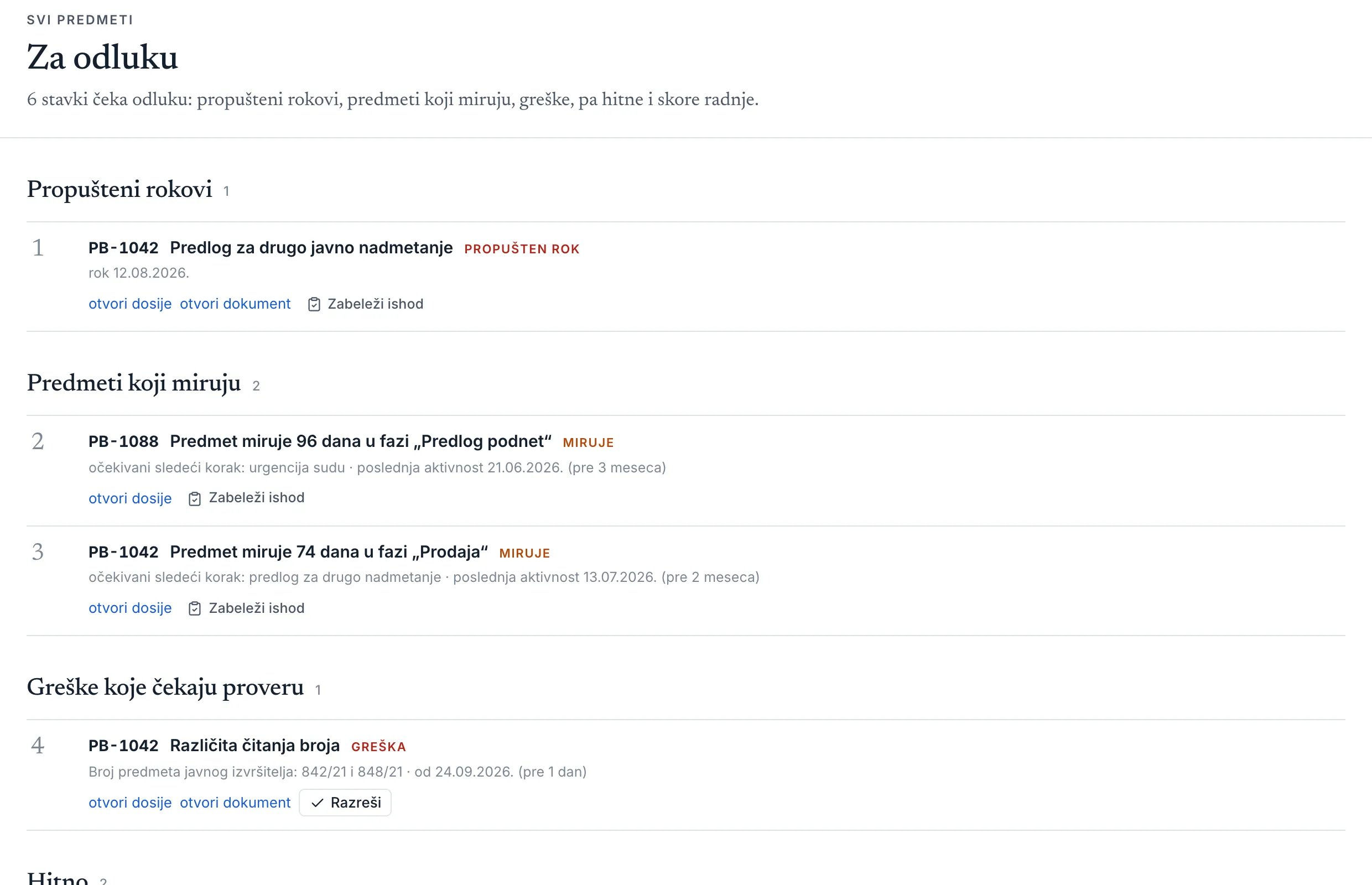
- alerts on cases that have stalled.
Originals stay in the firm’s SharePoint. Processing runs in Azure’s EU data zone, sign-in is with the company account.
What the pilot showed
It processed 485 documents without a single failed job. Of 109 citations, 108 were machine-verified in the source text; one was flagged for a human. Preparing for a hearing now takes about ten minutes. Fact extraction costs less than a cent per document.
What’s next
The same core moves to the firm’s next processes: per-client reporting and portfolio tracking.
“The solution we received within a few days completely solved a problem that had been costing our lawyers dozens of hours, with incredible speed and precision.”